Timber Prices: Costs, Wood Types & Calculation Guide
Discover what affects timber prices, including wood species, moisture, quality and dimensions. Learn how to calculate timber volume in cubic metres.
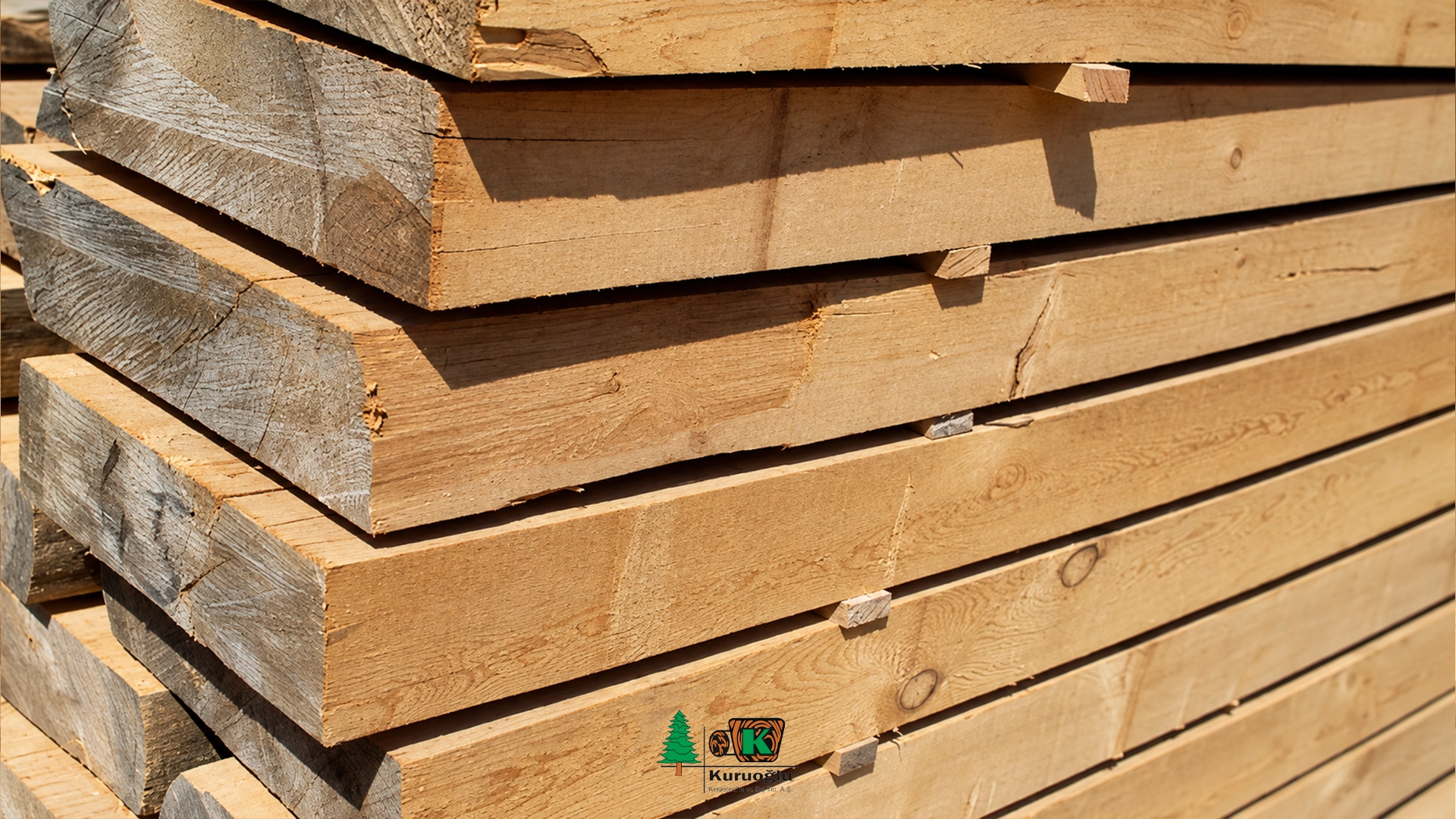
Timber Prices: A Guide to Costs, Wood Types and Volume Calculation
Timber is used in a wide range of projects, from furniture manufacturing and interior design to doors, flooring and structural applications. Its natural appearance and versatility make it a popular material, but selecting the right timber requires more than comparing prices.
Timber prices vary according to the wood species, quality, moisture content, dimensions and processing method. Even two boards made from the same type of wood may have different prices because of their grade, thickness or drying requirements.
For businesses and manufacturers, understanding these differences is essential when preparing a budget. The lowest price per cubic metre does not always result in the lowest overall project cost. Waste, machining, transport and the amount of usable material also need to be considered.
In this guide, we explain what affects timber prices, compare common wood species and show you how to calculate timber volume. We also cover the information you should provide when requesting a quotation.
What Is Timber?
Timber is wood that has been cut and prepared for use in construction, manufacturing or other applications. It can be supplied in different thicknesses, widths and lengths depending on the intended use.
Common applications include:
- Solid wood furniture.
- Doors and windows.
- Flooring and stairs.
- Interior wall panels.
- Decorative products.
- Joinery and woodworking.
- Structural elements.
- Packaging and other industrial uses.
The required properties depend on the project. For example, timber used for indoor furniture may need a moisture content suitable for the conditions in which the furniture will be used. Timber intended for an outdoor application must also be assessed for its suitability for the expected environment.
When reviewing timber prices, it is therefore important to consider the material’s characteristics as well as the quoted cost.
How Are Timber Prices Determined?
Timber prices are influenced by several factors throughout the supply chain. These include the cost of sourcing the raw material, processing the logs, drying the boards, sorting them by quality and transporting the finished product.
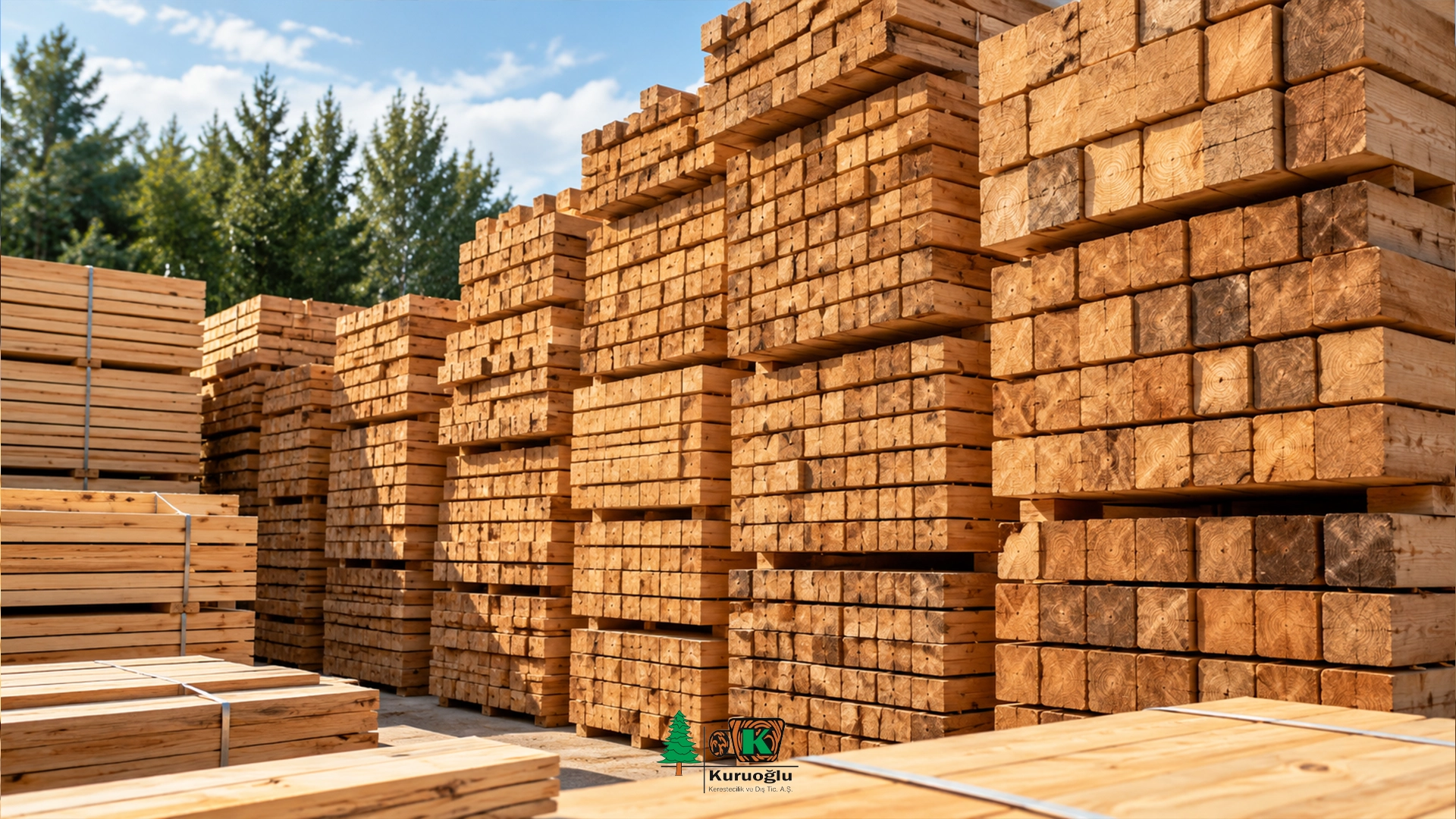
The main factors affecting timber prices include:
- Wood species and origin.
- Timber grade and appearance.
- Thickness, width and length.
- Moisture content.
- Drying method.
- Whether the timber is rough-sawn or machined.
- Knots, cracks, colour variation and other natural features.
- Order quantity.
- Availability and supply conditions.
- Delivery distance.
- Exchange rates and import costs for imported products.
For instance, two oak boards of the same thickness may be offered at different prices if one has been selected for a more uniform appearance and the other contains more visible natural characteristics.
A meaningful price comparison should therefore be based on products with similar specifications.
Why Do Timber Prices Change?
Current timber prices can change as a result of market conditions and product availability. Changes in raw material supply, production expenses, energy costs and transportation can all affect quotations.
For imported timber, exchange rates and international freight costs may also influence the final price. For locally sourced products, availability, processing and storage conditions can contribute to price changes.
Special customer requirements may also affect the quotation. A request for specific dimensions, a particular grade or additional machining can require different sourcing and production arrangements from a standard stock item.
Because of these variables, requesting a current quotation for the exact product you need is more useful than relying on a general price list.
What Factors Affect Timber Prices?
1. Wood Species
Wood species is one of the main factors affecting timber prices. Different species have different growth characteristics, grain patterns, appearances and working properties.
Oak, walnut, beech and pine are used for different purposes. Some are selected for their visual characteristics, while others are chosen for workability or suitability for a particular application.
When choosing a species, consider:
- The intended use of the finished product.
- The conditions in which it will be used.
- The desired colour and grain.
- The required dimensions.
- The machining and finishing processes.
- Your project budget.
The right choice is the one that meets your project requirements, not simply the one with the lowest initial cost.
2. Grade and Quality
The grade of timber can affect both its price and how it is used. Grading may consider features such as knots, cracks, colour variation and grain characteristics.
Not every visible feature is a defect. Knots, for example, may be desirable in furniture designed to have a rustic appearance. A project requiring a more uniform surface may need a different selection.
Grade names and requirements can vary according to the standard or the supplier’s classification system. Ask what a quoted grade means before comparing it with another offer.
3. Dimensions
Thickness, width and length affect both timber availability and price. Boards with specific dimensions may require additional selection or processing.
When requesting a quotation, specify whether the dimensions refer to:
- Rough-sawn timber.
- Dimensions before drying.
- Dimensions before machining.
- Final dimensions after planing or cutting.
This distinction matters because machining can reduce the dimensions of a board. If your project requires a particular finished size, share that information with the supplier.
4. Moisture Content
Wood can absorb or release moisture depending on the temperature and relative humidity of its surroundings. Changes in moisture content may affect its dimensions and behaviour during use.
Timber should therefore be selected with its intended environment in mind. Furniture used indoors, for example, may have different moisture requirements from timber used in other conditions.
When requesting a quotation, provide the intended use or specify the required moisture content and how it should be measured.
5. Drying Method
Timber may be dried naturally or in a controlled drying environment. Drying time depends on the species, thickness, initial moisture content and conditions used.
Kiln drying allows temperature, humidity and airflow to be managed during the process. However, the term “kiln-dried” does not by itself guarantee a particular moisture content. The target moisture level and measurement method should be agreed when purchasing.
Drying requires time, equipment and energy. As a result, kiln-dried timber prices may differ from those of comparable timber supplied in another condition.
6. Processing and Machining
Rough-sawn timber and timber that has been planed, cut to size or otherwise machined may have different costs.
Special cutting, surface preparation and sorting can require additional labour. When comparing timber prices, check whether the products have undergone the same processing.
7. Order Quantity and Delivery
Order quantity can affect packaging and transportation planning. However, a larger order does not automatically guarantee a lower unit price.
The delivery location, unloading requirements and packaging needs can also influence the total cost. Always confirm whether transport is included in the quotation.
Timber Prices by Wood Species
Different wood species are selected for their appearance and working characteristics. The table below provides a general overview; the final choice should be based on the actual product and the requirements of the project.
| Wood species | Common applications | Points to discuss when requesting a quote |
|---|---|---|
| Oak | Furniture, flooring, stairs and interior projects | Species, origin, grain, grade and moisture content |
| Walnut | Furniture, decorative products and interior details | Colour, grain, dimensions, grade and availability |
| Beech | Furniture, interior components and other wood products | Drying, machining and intended environment |
| Pine | Construction, packaging, furniture and decoration | Species, knots, intended use and any necessary treatment |
Oak Timber Prices
Oak is commonly considered for furniture and interior projects because of its natural grain and range of possible applications.
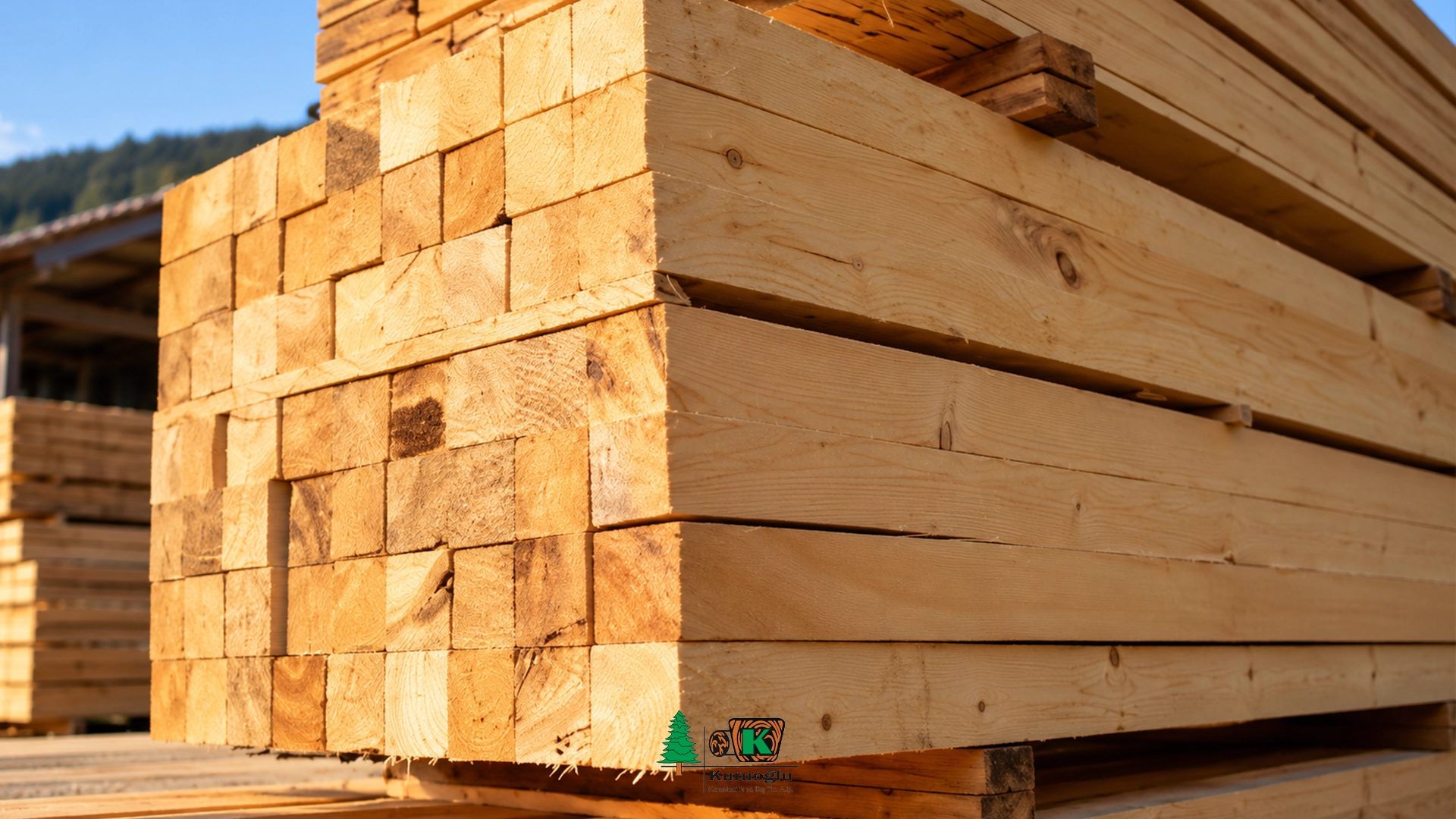
It can be used for tables, chairs, flooring, stairs and decorative products. However, oak timber is not a single uniform product. Species, origin, grade, dimensions and moisture content all affect the quotation.
When comparing oak timber prices, check:
- The oak species and origin.
- Whether the timber is rough-sawn or machined.
- The thickness and length.
- The target moisture content.
- The grade and appearance.
- The amount of colour variation or knots accepted.
If your project requires a specific product such as European white oak, include that information in the request. Clear specifications help suppliers prepare comparable quotations.
Walnut Timber Prices
Walnut is often selected for furniture and decorative projects where colour and grain are important design features.
It may be used for tables, cabinets, interior panels and custom-made products. Walnut timber prices vary according to species, dimensions, appearance, grade and supply conditions.
For projects where appearance is especially important, ask whether samples or photographs of the available batch can be reviewed before placing an order.
Beech Timber Prices
Beech is used in furniture manufacturing and a range of interior applications. Its working and surface characteristics can make it an option for certain projects.
When comparing beech timber prices, consider the drying condition, thickness, grade and intended use. A lower initial price may not be the best option if the material requires additional machining or creates more waste than expected.
Pine Timber Prices
Pine is a broad product category used in construction, packaging, furniture and decorative applications.
Pine timber prices depend on the species, dimensions, knot characteristics and intended use. Timber for outdoor applications should be assessed for its suitability and for any treatment or maintenance the specific conditions require.
What Affects Kiln-Dried Timber Prices?
Kiln-dried timber prices depend on the species, thickness, drying process and target moisture content. Thicker boards and thinner boards may require different drying conditions and time.
When comparing quotations, do not rely only on the phrase “dry timber.” Ask for the details that matter to your project.
Useful information to provide includes:
- The intended use of the timber.
- The required wood species.
- Thickness, width and length.
- Target moisture content or expected operating environment.
- Required grade and quantity.
- Delivery location and timing.
For furniture production, it is particularly useful to discuss the conditions in which the finished product will be used. This helps establish a suitable specification before the timber is processed.
How to Calculate Timber Volume in Cubic Metres
Timber prices are often quoted per cubic metre, written as m³. For rectangular boards, volume can be calculated by multiplying thickness, width and length, using metres for each measurement.
Formula:
Thickness (m) × Width (m) × Length (m) × Number of pieces = Total volume (m³)
Example Timber Volume Calculation
Suppose you need 10 pieces with the following dimensions:
- Thickness: 5 cm
- Width: 20 cm
- Length: 3 metres
- Quantity: 10 pieces
First, convert centimetres to metres:
- 5 cm = 0.05 m
- 20 cm = 0.20 m
Then calculate:
0.05 × 0.20 × 3 × 10 = 0.30 m³
The total volume of the 10 pieces is therefore 0.30 cubic metres.
If you know the price per cubic metre, you can calculate the material cost:
Total volume × Price per cubic metre = Material cost
This calculation covers the volume of rectangular pieces and the material cost based on the quoted unit price. Taxes, delivery, cutting and other services may be charged separately.
How Many Pieces Are in One Cubic Metre of Timber?
The number of pieces in one cubic metre depends on the dimensions of each piece. There is no single answer that applies to every timber product.
For example, a board that is 5 cm thick, 20 cm wide and 3 metres long has the following volume:
0.05 × 0.20 × 3 = 0.03 m³
The theoretical number of pieces in one cubic metre is:
1 ÷ 0.03 = approximately 33.3 pieces
In practical terms:
- 33 full pieces equal approximately 0.99 m³.
- 34 full pieces equal approximately 1.02 m³.
For an actual order, confirm the measurement tolerances and the supplier’s volume calculation method.
How to Account for Waste When Buying Timber
Calculating the exact volume required in the finished product is only the first step. Cutting, trimming, planing and selecting boards may create waste.
The amount of waste varies according to:
- The design of the product.
- The dimensions of the components.
- The grade of the timber.
- The cutting plan.
- The machining process.
- The appearance required in the final product.
For this reason, the same waste percentage should not be applied automatically to every project.
As a mathematical example, if you need 1 m³ of usable material and expect 10% of the purchased material to be lost during processing:
1 ÷ 0.90 = approximately 1.11 m³
This is an example rather than a recommended waste allowance. The expected rate should be estimated with your production team based on the actual timber and cutting plan.
When comparing timber prices, consider the cost of usable material. A product with a lower price per cubic metre may not offer the best value if it results in substantially more waste.
How to Request a Timber Price Quotation
Providing clear specifications makes it easier for a supplier to understand your needs and prepare a useful quotation.
Include the following information:
- Wood species: Oak, walnut, beech or another species.
- Intended use: Furniture, flooring, stairs or another application.
- Dimensions: Thickness, width and length.
- Quantity: Cubic metres or number of pieces.
- Grade: Appearance requirements and acceptable natural features.
- Moisture content: Target level or intended environment.
- Processing: Rough-sawn, planed or cut to a specific size.
- Delivery: Destination and requested date.
You can also ask the supplier:
- Which grade and dimensions does the price cover?
- Is the timber kiln-dried, and what is the target moisture content?
- Is VAT included?
- Is transport included?
- Are cutting and planing charged separately?
- How long is the quotation valid?
- Is the product available from current stock?
These questions help you compare quotations on the same basis and understand the total project cost.
How Should Timber Be Stored?
Storage conditions can affect the condition of timber after purchase. Inappropriate storage may expose the material to moisture changes or physical damage.
When storing timber:
- Keep it clear of direct contact with the ground.
- Stack it on suitable, level supports.
- Consider airflow and environmental conditions.
- Protect it from rain, standing water and excessive moisture.
- Avoid prolonged exposure to direct sunlight.
- Consider the conditions of the intended work area before use.
The appropriate storage method depends on the species, moisture condition and intended application. For sensitive projects, discuss storage and handling requirements with the supplier and the team using the material.
How to Compare Timber Prices Effectively
Comparing timber prices is easier when every offer describes the same product and services. Two quotations may appear different simply because one includes drying or delivery while the other does not.
Before deciding, compare:
- Species and origin: Are the products genuinely equivalent?
- Grade: Are the same appearance and quality requirements included?
- Dimensions: Are the quoted sizes rough or finished?
- Moisture: Is the same target moisture content specified?
- Machining: Does the price include planing or cutting?
- Quantity: Are both quotations based on the same volume?
- Delivery: Is transport included, and to which address?
- Tax: Is VAT included or added separately?
- Availability: Can the product be supplied when needed?
- Waste: How much material is likely to be usable?
A complete comparison helps prevent unexpected expenses and supports more accurate budgeting.
Frequently Asked Questions About Timber Prices
What Determines Timber Prices?
Timber prices depend on wood species, grade, dimensions, moisture content, drying method, processing, order quantity and delivery requirements.
Why Are Timber Prices Often Quoted Per Cubic Metre?
A cubic metre is a unit of volume. It allows buyers and suppliers to calculate the total amount of timber across boards with different dimensions. Some products may also be offered per piece or using another unit.
Is the Cheapest Timber Suitable for Every Project?
No. The timber must also meet the project’s requirements for species, moisture, grade, dimensions and performance. Additional waste or processing costs can make a low-priced product more expensive overall.
Why Do Oak Timber Prices Vary?
Oak timber prices can vary because of the species, origin, dimensions, drying condition, grade and availability. Specific appearance requirements may also affect the quotation.
Does Kiln-Dried Timber Always Have the Same Moisture Content?
No. The final moisture content depends on the drying process and the product. Agree on the target moisture content and measurement method when requesting a quote.
Is Delivery Included in Timber Prices?
This depends on the supplier’s quotation. Ask whether delivery, unloading, taxes and any additional services are included before comparing offers.
What Is the Difference Between Rough-Sawn and Planed Timber?
Rough-sawn timber has been cut but may require further surface preparation or machining. Planed timber has undergone a surface-smoothing process. Confirm the scope of machining and the final dimensions with the supplier.
Should I Choose Timber Based Only on Price?
No. Price is important, but it should be considered alongside suitability, quality, moisture content, processing requirements and expected waste. The best choice is the one that meets the project’s needs at an acceptable total cost.
Find Timber for Your Project with Kuruoğlu Kerestecilik
Every project has different timber requirements. Furniture manufacturers may prioritise appearance and moisture content, while other projects may place greater emphasis on dimensions, machining or the intended environment.
When researching timber prices, consider the product specifications and total cost together. Clearly defining the species, grade, dimensions and delivery requirements makes it easier to compare offers and plan your budget.
For information about oak, walnut and other timber options, or to request a quotation based on your project requirements, contact Kuruoğlu Kerestecilik.