Timber Prices 2026: Current Prices per m³ & Buying Guide
Discover what affects timber prices in 2026. Learn about pine, oak, beech, walnut and other timber prices per m³ and request a current quote.
Timber Prices 2026: Factors Affecting Current Timber Costs
Timber is one of the most widely used natural materials in industries ranging from furniture manufacturing and construction to interior design, decoration, architectural projects, and industrial production. For companies, manufacturers, architects, contractors, and individual buyers planning to purchase wood products, one of the most frequently researched topics is timber prices.
However, there is no single fixed price that can be applied to every type of timber. The cost of timber may vary significantly depending on the wood species, quality grade, dimensions, moisture content, drying method, origin, processing level, order volume, and current market conditions.
For this reason, when researching current timber prices, it is important to evaluate much more than just the price per cubic meter. The technical characteristics of the timber, its intended use, and its quality class must also be taken into consideration.
As Kuruoğlu Kerestecilik ve Dış Tic. A.Ş., we offer various timber solutions suitable for different industries, production processes, and project requirements. Determining the correct wood species, dimensions, and technical characteristics before requesting a quotation can help both optimize costs and improve overall project performance.
What Determines Timber Prices?
There are many factors that influence the cost of timber. Even within the same wood species, prices can vary depending on quality, dimensions, moisture content, drying method, and product availability.
The main factors affecting timber prices include:
Wood species
Timber quality grade
Thickness, width, and length
Moisture content
Kiln-dried or naturally dried condition
Processing level
Domestic or imported origin
Order quantity
Transportation and logistics costs
Supply and demand conditions
Currency exchange rates
Raw material costs
Production and energy expenses
For example, structural timber used in construction cannot be priced in the same way as high-grade timber selected for premium furniture production.
Similarly, exotic hardwoods and imported timber species may have different pricing structures compared with commonly available domestic wood species.
Therefore, buyers should always compare equivalent products when evaluating timber prices.
How Are Timber Prices per m3 Calculated?
One of the most common pricing methods in the timber industry is based on cubic meters. This is why searches such as timber prices per m3, timber cubic meter price, and lumber price per cubic meter are very common among professional buyers.
The basic formula for calculating timber volume is:
Thickness × Width × Length × Quantity
All dimensions must be converted into meters before performing the calculation.
For example, if a timber board is:
5 cm thick
20 cm wide
3 meters long
the calculation would be:
0.05 × 0.20 × 3 = 0.03 m³
If you purchase 20 pieces:
0.03 × 20 = 0.60 m³
However, the final price of 0.60 m³ of timber cannot be determined solely based on volume.
The type of wood, quality grade, moisture level, drying process, surface quality, origin, and dimensions all play an important role in determining the final cost.
For this reason, instead of simply asking, “How much does 1 m³ of timber cost?”, it is better to provide detailed information about your requirements.
Timber Prices in 2026
Timber prices in 2026 may fluctuate depending on global and local economic conditions.
Several factors may influence prices throughout the year, including:
Raw material availability
Energy costs
Transportation expenses
Foreign exchange rates
Import costs
Production costs
International supply chains
Demand from the construction and furniture industries
Imported wood species may be especially sensitive to currency movements and global transportation costs.
Domestic timber products may be affected more heavily by raw log prices, production expenses, energy costs, and regional supply conditions.
For this reason, old price lists found online may not accurately represent current timber prices.
The most reliable way to obtain accurate pricing is to request a current quotation based on the exact wood species, dimensions, quality grade, quantity, and delivery requirements.
Do Timber Prices Vary by Wood Species?
Yes. Wood species is one of the most important factors affecting timber pricing.
Each species has different characteristics in terms of hardness, density, durability, appearance, workability, availability, and intended use.
As a result, each wood species may have a different price range.
Pine Timber Prices
Pine is one of the most commonly used wood species in both Turkey and international markets.
It can be used in:
Construction
Roofing
Timber structures
Packaging
Furniture manufacturing
Interior decoration
Joinery
Pine timber prices may vary according to the species, grade, dimensions, moisture content, and total order volume.
Although pine is widely available, buyers should still choose the correct product according to the intended application.
Price should not be the only factor considered when selecting structural or production timber.
Oak Timber Prices
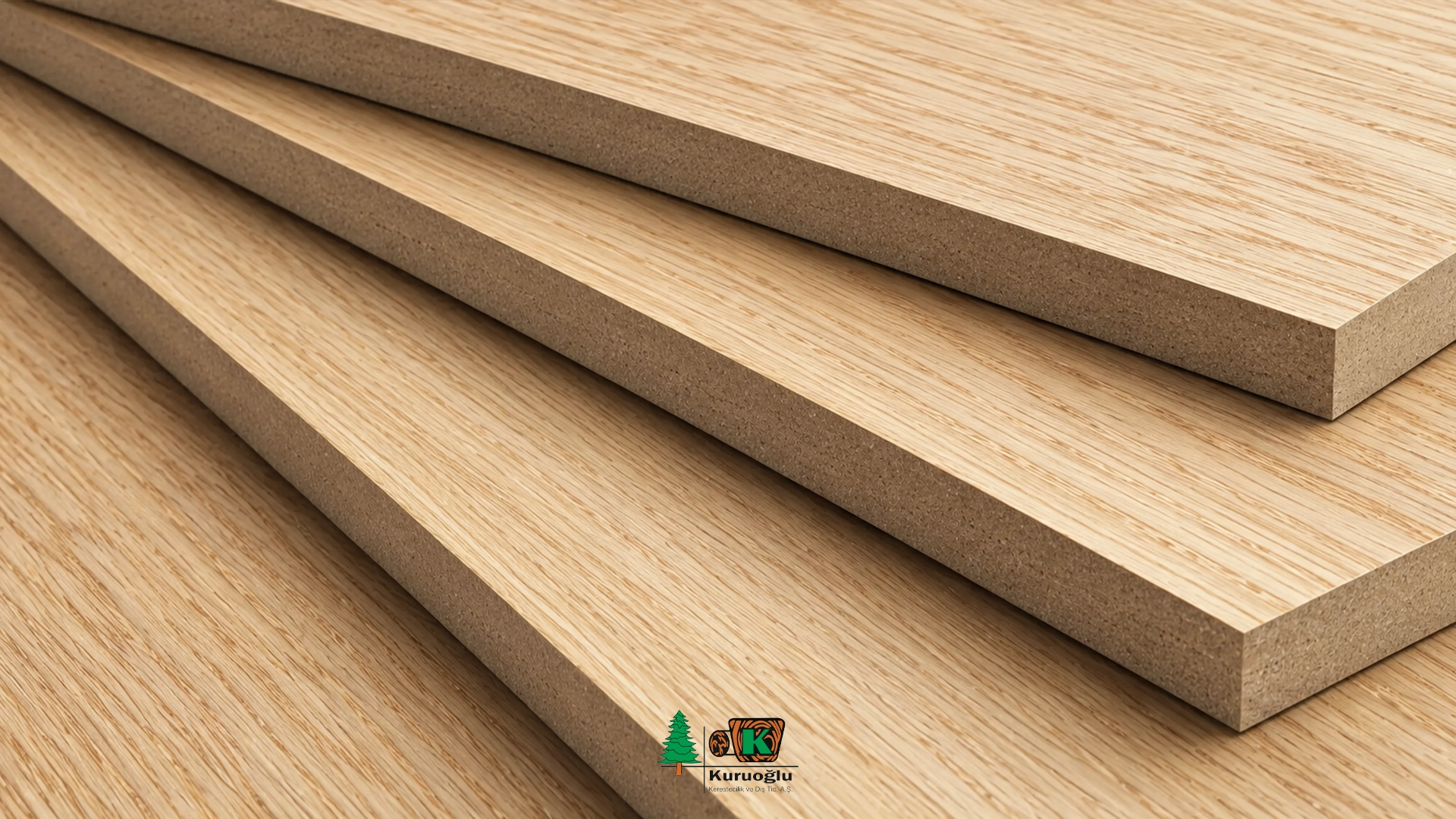
Oak is known for its strength, durability, natural appearance, and distinctive grain pattern.
It is widely preferred for:
Furniture
Flooring
Interior design
Decorative wall applications
Stairs
Doors
Custom wood projects
Oak timber prices depend on several factors, including origin, quality grade, thickness, width, moisture content, drying condition, and visual quality.
High-grade oak selected for furniture or decorative applications may be priced differently from standard-grade products.
When purchasing oak, it is important to consider both technical performance and visual quality.
Beech Timber Prices
Beech is widely used in furniture manufacturing due to its relatively uniform structure and workability.
Common applications include:
Chairs
Tables
Furniture frames
Stairs
Interior joinery
Various wooden components
Beech timber prices may vary depending on quality, dimensions, moisture content, drying condition, and order quantity.
For furniture manufacturers in particular, moisture content is a critical factor.
Properly dried timber can reduce the risk of movement, cracking, warping, and deformation after production.
Walnut Timber Prices
Walnut is one of the most valued wood species for decorative and premium interior projects.
Its natural color, rich grain structure, and elegant appearance make it popular for:
Premium furniture
Tables
Coffee tables
Wall panels
Veneer
Interior decoration
Custom design projects
Walnut timber prices can vary significantly depending on origin, grade, grain quality, dimensions, moisture level, and defects.
Since walnut is often selected for visual applications, buyers should consider appearance as well as cost.
Spruce and Fir Timber Prices
Spruce and fir are commonly used softwoods in construction, joinery, interior applications, and various wood manufacturing processes.
Spruce timber prices and fir timber prices can vary according to dimensions, quality grade, origin, moisture level, and order quantity.
For large-scale projects, the total cubic meter requirement can have an important impact on pricing.
Ash Timber Prices
Ash is a strong hardwood known for its attractive grain and good mechanical properties.
It is widely used in:
Furniture
Interior design
Decorative applications
Custom joinery
Wooden components
Ash timber prices are generally influenced by grade, thickness, width, length, drying condition, and stock availability.
For projects where visual appearance and durability are important, ash can be a strong alternative.
Iroko Timber Prices
Iroko is a tropical hardwood commonly associated with outdoor and architectural applications.
Depending on the project and application conditions, it may be used in exterior joinery, decking, architectural details, and custom wood projects.
Iroko timber prices can be affected by:
Import costs
Exchange rates
Grade
Dimensions
Availability
Shipping costs
As with many imported and exotic hardwood species, prices can change according to global market conditions.
Therefore, obtaining an updated quotation before purchasing is highly recommended.
Sapele and Sipo Timber Prices
Sapele and Sipo are imported wood species often used in furniture, doors, decorative applications, interior joinery, and custom architectural projects.
Their pricing may depend on:
Country of origin
Stock availability
Quality grade
Dimensions
Moisture level
Currency exchange rates
Since imported wood markets can change quickly, buyers should avoid relying on outdated price lists.
Current quotations provide a more accurate reflection of real purchasing costs.
Why Are Kiln-Dried Timber Prices Different?
Moisture content is one of the most important technical characteristics of timber.
Wood naturally exchanges moisture with its environment.
If timber is used with an unsuitable moisture level, it may experience dimensional changes over time.
Kiln drying is a controlled process used to reduce moisture content under specific temperature and humidity conditions.
This process requires:
Special equipment
Energy
Time
Technical control
Production capacity
For this reason, kiln-dried timber prices may be different from prices for timber that has not undergone controlled drying.
Kiln-dried timber can be particularly important for:
Furniture production
Doors
Interior joinery
Panels
Precision woodworking
Interior architectural applications
The correct moisture level can help improve dimensional stability and manufacturing consistency.
How Does Timber Quality Affect Price?
Timber quality does not simply refer to whether the wood looks attractive.
Several natural and technical characteristics may affect grading, including:
Knots
Cracks
Grain structure
Color variation
Warping
Surface defects
Natural imperfections
Overall appearance
Higher-grade timber with fewer visible defects is often preferred in premium furniture and decorative applications.
Therefore, higher-quality timber may have a higher price than standard or industrial grades.
However, this does not mean that every project requires the most expensive timber.
The best approach is to choose a quality grade that matches the actual requirements of the project.
Do Timber Dimensions Affect Prices?
Yes.
Thickness, width, and length can significantly influence timber prices.
Standard dimensions may be easier to source and process, while unusual or oversized dimensions may result in higher production waste.
Wide, thick, long, and visually clean boards may also be more difficult to obtain from a log.
For this reason, two products made from the same wood species can have different prices if their dimensions differ.
When comparing prices from different suppliers, always make sure that:
Wood species are the same
Dimensions are the same
Quality grades are equivalent
Moisture levels are similar
Drying conditions are comparable
Otherwise, the price comparison may be misleading.
Wholesale Timber Prices
For furniture manufacturers, construction companies, architects, industrial manufacturers, contractors, and wood-processing companies, wholesale timber prices can represent a major part of production costs.
Large orders may allow for different production, packaging, loading, and transportation arrangements.
Therefore, high-volume purchases are often priced according to the specific project.
When requesting wholesale timber prices, it is helpful to provide:
Wood species
Quality grade
Thickness
Width
Length
Estimated cubic meter quantity
Drying requirements
Intended use
Delivery destination
One-time or recurring order information
Providing this information can make it easier to identify the most suitable timber options and prepare a more accurate quotation.
Construction Timber Prices
Timber is used for various purposes in the construction industry.
Common applications may include:
Roof structures
Formwork
Timber frames
Temporary structures
Structural applications
General construction work
Construction timber prices vary according to dimensions, quality, species, volume, and technical requirements.
When choosing construction timber, buyers should consider product suitability as well as price.
Choosing an unsuitable material simply because it is cheaper can result in additional costs later in the project.
What Should You Consider When Buying Timber?
Buying timber should not be based solely on price.
The first step is to determine where and how the material will be used.
Timber selected for furniture production will have different requirements from timber used outdoors or in construction.
Before purchasing timber, consider the following factors:
Choose the right wood species: Different wood species have different mechanical, visual, and technical characteristics.
Check moisture content: Proper moisture levels are particularly important for furniture and precision woodworking.
Determine the required quality grade: Avoid paying for unnecessary quality, but do not choose a grade that is unsuitable for the project.
Confirm dimensions: Thickness, width, and length should be specified before requesting a quotation.
Calculate total volume: For professional purchasing, calculating total cubic meter requirements can make the quotation process easier.
Explain the intended use: Letting the supplier know how the timber will be used may help determine the most suitable product.
Request current pricing: Since market conditions can change, current quotations are more reliable than old online price lists.
Is the Cheapest Timber Always the Best Choice?
Not necessarily.
A lower unit price may seem attractive, but overall project costs depend on much more than the initial purchase price.
Factors such as:
Waste percentage
Moisture level
Defects
Processing efficiency
Dimensional stability
Quality consistency
can significantly affect the final production cost.
A cheaper product that creates excessive waste during manufacturing may ultimately cost more than a higher-quality alternative.
Therefore, when comparing timber prices, buyers should consider both the purchase cost and the usable material yield.
For manufacturers working with repetitive production processes, consistent timber quality can also improve production efficiency.
What Information Should Be Included in a Timber Price Request?
If you want to receive an accurate timber quotation, provide as much technical information as possible.
Instead of simply asking:
“How much does oak timber cost?”
a more useful request would be:
“I need approximately 5 m³ of 50 mm thick kiln-dried oak timber for furniture production. Could you provide a quotation?”
A detailed price request should ideally include:
Wood species
Quality grade
Thickness
Width
Length
Total quantity or cubic meters
Drying or moisture requirements
Intended application
Delivery location
Providing these details can significantly improve the accuracy of the quotation.
Why Do Timber Prices Change?
Timber is a natural raw material and its supply chain is affected by numerous factors.
Changes in:
Log availability
Energy costs
Labor expenses
Transportation
Global trade
Exchange rates
Import costs
Market demand
may all affect timber prices.
Imported species may be more heavily influenced by international logistics and currency movements.
Domestic timber may be more affected by raw material, production, energy, and regional supply costs.
For this reason, businesses purchasing large quantities should prepare their budgets based on current quotations rather than old online price information.
How to Choose the Right Timber for Your Project
Selecting the correct timber species can influence the performance, appearance, manufacturing process, and total cost of a project.
For furniture manufacturing, appearance and workability may be important.
For construction, structural characteristics may become more important.
For decorative projects, grain pattern, color, and surface quality may be key selection criteria.
Before choosing timber, consider the following questions:
Will the timber be used indoors or outdoors?
How important is visual appearance?
Will it be used structurally?
Will machining or shaping be required?
Will paint, varnish, oil, or another surface treatment be applied?
Which dimensions are required?
How many cubic meters are needed?
Is regular supply required?
Answering these questions can make it easier to identify the right timber solution.
Current Timber Prices from Kuruoğlu Kerestecilik
When purchasing timber, product variety, material quality, technical suitability, and reliable supply are all important considerations.
Kuruoğlu Kerestecilik ve Dış Tic. A.Ş. provides different timber and wood product options for furniture manufacturers, construction companies, architects, interior designers, industrial manufacturers, and professional wood users.
Whether your project requires commonly used wood species such as pine, oak, and beech or more specialized products such as walnut, iroko, sapele, sipo, ash, and other timber species, defining your technical requirements before purchasing can help you make a more accurate decision.
For updated timber prices, you can contact Kuruoğlu Kerestecilik and provide information about the required wood species, dimensions, quality grade, and quantity.
This allows you to evaluate suitable product alternatives and receive current pricing based on your project requirements.
Frequently Asked Questions About Timber Prices
How much does 1 m³ of timber cost?
There is no single fixed price for 1 m³ of timber.
The price depends on wood species, quality grade, dimensions, moisture content, drying condition, origin, and order quantity.
For accurate timber prices per m3, a quotation should be requested based on the specific product requirements.
What factors affect timber prices?
Timber prices are mainly affected by wood species, quality, moisture content, dimensions, drying method, order volume, transportation costs, currency rates, and market conditions.
Is pine timber cheaper than oak timber?
Pine and oak have different technical characteristics and intended uses.
For this reason, choosing between them should not be based only on price.
The correct species should be selected according to the technical and visual requirements of the project.
Is kiln-dried timber more expensive?
Kiln drying requires energy, equipment, time, and production control.
Therefore, kiln-dried timber may have a different price than untreated or naturally dried material.
For furniture and precision manufacturing, however, controlled moisture content can provide important advantages.
How can I get wholesale timber prices?
To obtain wholesale pricing, provide information about the wood species, quality grade, dimensions, total cubic meter requirement, drying specifications, and delivery location.
Large orders may be quoted according to project-specific requirements.
Is it reliable to compare timber prices online?
Online price lists may provide general guidance, but timber products may differ in species, dimensions, quality, moisture content, and drying condition.
Therefore, buyers should only compare products with equivalent specifications.
Is timber sold by piece or by cubic meter?
Sales methods may vary depending on the product and supplier.
However, cubic meter calculations are widely used in professional timber trading, especially for large-volume orders.
Request a Current Timber Price Quote
Selecting the correct timber can directly influence project quality, manufacturing efficiency, durability, and overall costs.
For this reason, buyers should not focus only on finding the lowest price.
Wood species, quality grade, moisture content, dimensions, intended use, and processing requirements should all be evaluated together.
For current timber prices, timber prices per m3, stock availability, and suitable timber alternatives for your project, you can contact Kuruoğlu Kerestecilik ve Dış Tic. A.Ş. and request a quotation based on your specific requirements.