Kiln-Dried Lumber: Ideal Wood Moisture Content
What is kiln-dried lumber? Discover ideal wood moisture content, timber drying methods, moisture measurement, and tips for choosing quality lumber.
Kiln-Dried Lumber: What Is the Ideal Wood Moisture Content?
Wood is one of the most versatile natural materials used in construction, furniture manufacturing, interior design, and architectural applications. Its natural beauty, durability, structural characteristics, and wide range of applications make it an essential material in many industries.
However, the long-term performance of wood depends on more than its species, appearance, or surface quality. One of the most important factors influencing its stability and workability is its moisture content.
Kiln-dried lumber is wood that has undergone a controlled drying process to reduce its moisture content to a level suitable for its intended application. This process plays a significant role in modern woodworking, furniture production, flooring manufacturing, and other industries where dimensional accuracy is essential.
Because wood is a hygroscopic material, it naturally absorbs and releases moisture in response to environmental conditions. If timber is not dried properly before manufacturing, changes in wood moisture content may cause warping, twisting, cracking, shrinkage, and other dimensional problems.
These changes can affect not only the appearance of finished products but also their structural integrity, manufacturing quality, and long-term usability.
So, what exactly is kiln-dried lumber? What is the ideal wood moisture content for different applications? How does kiln drying work, and why is controlling moisture so important?
In this comprehensive guide prepared for Kuruoğlu Kerestecilik ve Dış Tic. A.Ş., we explore the science behind wood drying, the advantages of kiln-dried timber, recommended moisture levels, measurement techniques, storage requirements, and essential considerations when selecting high-quality lumber.
What Is Kiln-Dried Lumber?
Kiln-dried lumber refers to sawn timber that has been dried inside a specially designed chamber where temperature, relative humidity, and airflow are carefully controlled.
The primary objective of kiln drying is to reduce the moisture naturally present inside wood to a level appropriate for manufacturing, construction, or other intended applications.
Freshly harvested trees contain significant quantities of water. The amount varies depending on the species, growing conditions, location within the tree, and time elapsed since harvesting.
Freshly cut timber often contains considerably more moisture than is suitable for many finished wood products.
For this reason, the drying process is an essential stage in preparing lumber for industrial use.
During kiln drying, timber is arranged inside a controlled environment where heat and airflow help remove moisture.
The drying schedule must be selected according to the characteristics of the wood.
Properly processed kiln-dried lumber can offer several advantages:
Improved dimensional stability
Reduced risk of excessive shrinkage
Better preparation for machining and woodworking
More predictable manufacturing tolerances
Improved conditions for bonding and surface finishing
Reduced risk of certain moisture-related defects
Greater consistency for industrial production
However, kiln drying does not make wood completely resistant to moisture.
Even after drying, timber can continue to absorb or release moisture depending on the surrounding environment.
Therefore, proper storage and handling remain essential.
What Is Wood Moisture Content?
Wood moisture content refers to the quantity of water contained within a piece of wood, expressed as a percentage of its oven-dry weight.
Because wood is a hygroscopic material, it continuously interacts with moisture in the surrounding atmosphere.
When relative humidity increases, wood may absorb moisture. When relative humidity decreases, wood may release moisture.
This process continues until the wood approaches equilibrium with the surrounding environmental conditions.
The resulting moisture level is known as equilibrium moisture content, or EMC.
Understanding wood moisture content is essential because changes in moisture can influence the weight, dimensions, mechanical properties, adhesive bonding performance, and long-term stability of timber.
How Is Wood Moisture Content Calculated?
The standard oven-dry basis calculation uses the difference between the initial weight of a wood sample and its completely dry weight.
The formula is:
For example, suppose a piece of timber initially weighs 1,100 grams.
After drying to constant mass in an oven, its weight decreases to 1,000 grams.
The difference of 100 grams represents the water removed during drying.
Using the formula, the wood moisture content is calculated as 10%.
It is important to understand that the calculation is based on oven-dry wood weight rather than the total original weight.
Consequently, freshly harvested wood can sometimes have a moisture content exceeding 100%.
This is technically possible and does not indicate an error in measurement.
Why Is Wood Moisture Content Important?
Moisture has a direct influence on how timber behaves during manufacturing and after installation.
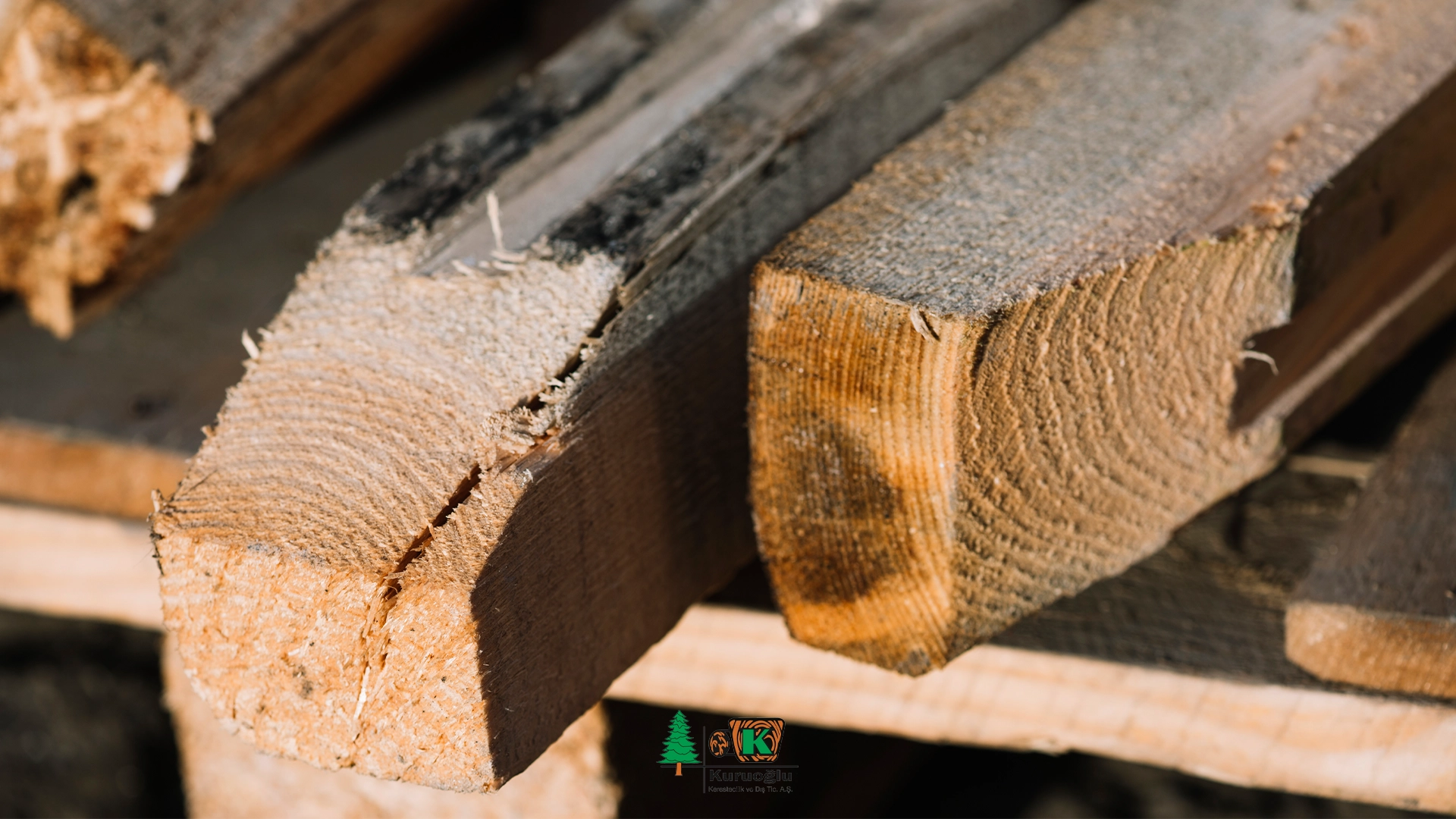
As the moisture level changes, wood may expand or contract.
These dimensional changes are particularly important below the fiber saturation point, where changes in bound water influence the physical dimensions of wood.
In products such as doors, flooring, cabinets, tabletops, and furniture components, moisture-related movement can create significant manufacturing and performance problems.
For example, a solid wood tabletop manufactured from insufficiently dried lumber may shrink after being installed in a dry indoor environment.
This can result in gaps, distortion, or stress around joints.
Similarly, wood that is excessively dry for its destination environment may absorb moisture and expand after installation.
The objective is not simply to achieve the lowest possible moisture content.
Instead, manufacturers should select a moisture level that is appropriate for the conditions in which the finished product will be used.
What Is the Ideal Moisture Content for Kiln-Dried Lumber?
There is no universal ideal moisture percentage for every type of kiln-dried lumber.
The appropriate moisture level depends on the wood species, intended application, environmental conditions, manufacturing specifications, and relevant industry standards.
For example, timber intended for furniture manufacturing inside a climate-controlled building may require a lower moisture level than timber used in outdoor architectural applications.
The following table provides approximate planning ranges commonly considered for different applications.
Application | Approximate Target Moisture Content |
|---|---|
Indoor furniture manufacturing | 6–10% |
Interior doors and joinery | 8–12% |
Solid hardwood flooring | 6–9% |
Interior decorative woodwork | 6–12% |
Sheltered exterior joinery | 12–16% |
General dry structural lumber | Often 19% or below, subject to standards |
These figures are general reference ranges rather than universal product acceptance criteria.
The final target should be established according to the expected service conditions and applicable product specifications.
Ideal Moisture Content for Furniture Manufacturing
Furniture manufacturing requires careful moisture control because dimensional accuracy is essential.
Solid wood tables, cabinets, chairs, beds, and other furniture components may develop defects if the timber moisture content is not compatible with the intended indoor environment.
For many climate-controlled interior applications, a moisture content of approximately 6–10% may be suitable.
However, regional climate, indoor relative humidity, and manufacturer requirements can change the appropriate target.
If wood contains excessive moisture during production, it may shrink after installation.
This can cause joint separation, surface irregularities, or distortion.
On the other hand, overly dry wood may absorb moisture and expand when moved to a more humid environment.
For this reason, manufacturers should focus on achieving the appropriate equilibrium conditions rather than simply drying the timber as much as possible.
Ideal Moisture Content for Hardwood Flooring
Moisture management is particularly important in hardwood flooring.
Solid hardwood flooring is sensitive to moisture differences between the wood, subfloor, and surrounding environment.
For certain climate-controlled indoor applications, a moisture content of approximately 6–9% may be considered.
However, the flooring manufacturer's requirements and the conditions of the installation location should always take priority.
Before installing hardwood flooring, it is important to evaluate the moisture condition of both the flooring material and the subfloor.
Failure to do so may contribute to problems such as cupping, gaps, buckling, or other dimensional changes.
Ideal Moisture Content for Exterior Wood Applications
Wood used outdoors is generally exposed to wider variations in temperature and relative humidity.
Rainfall, sunlight, seasonal conditions, and environmental exposure may influence its moisture content.
For some sheltered exterior joinery applications, approximately 12–16% may provide a useful initial planning range.
However, wood exposed directly to rainfall may reach considerably higher moisture levels during service.
Therefore, exterior timber performance depends on more than the initial drying process.
Appropriate species selection, construction details, drainage, protective finishes, and maintenance are also important.
How Does the Kiln-Drying Process Work?
Timber kiln drying is a technical process that requires careful control of heat, humidity, airflow, and drying duration.
The objective is to remove moisture efficiently while minimizing defects that may occur when wood dries too quickly or unevenly.
Step 1: Preparing the Timber
Before entering the kiln, lumber is evaluated according to factors such as species, thickness, initial moisture content, and quality characteristics.
Different wood species have different drying behaviors.
The thickness of the timber is also important because thicker boards generally require different drying schedules from thinner material.
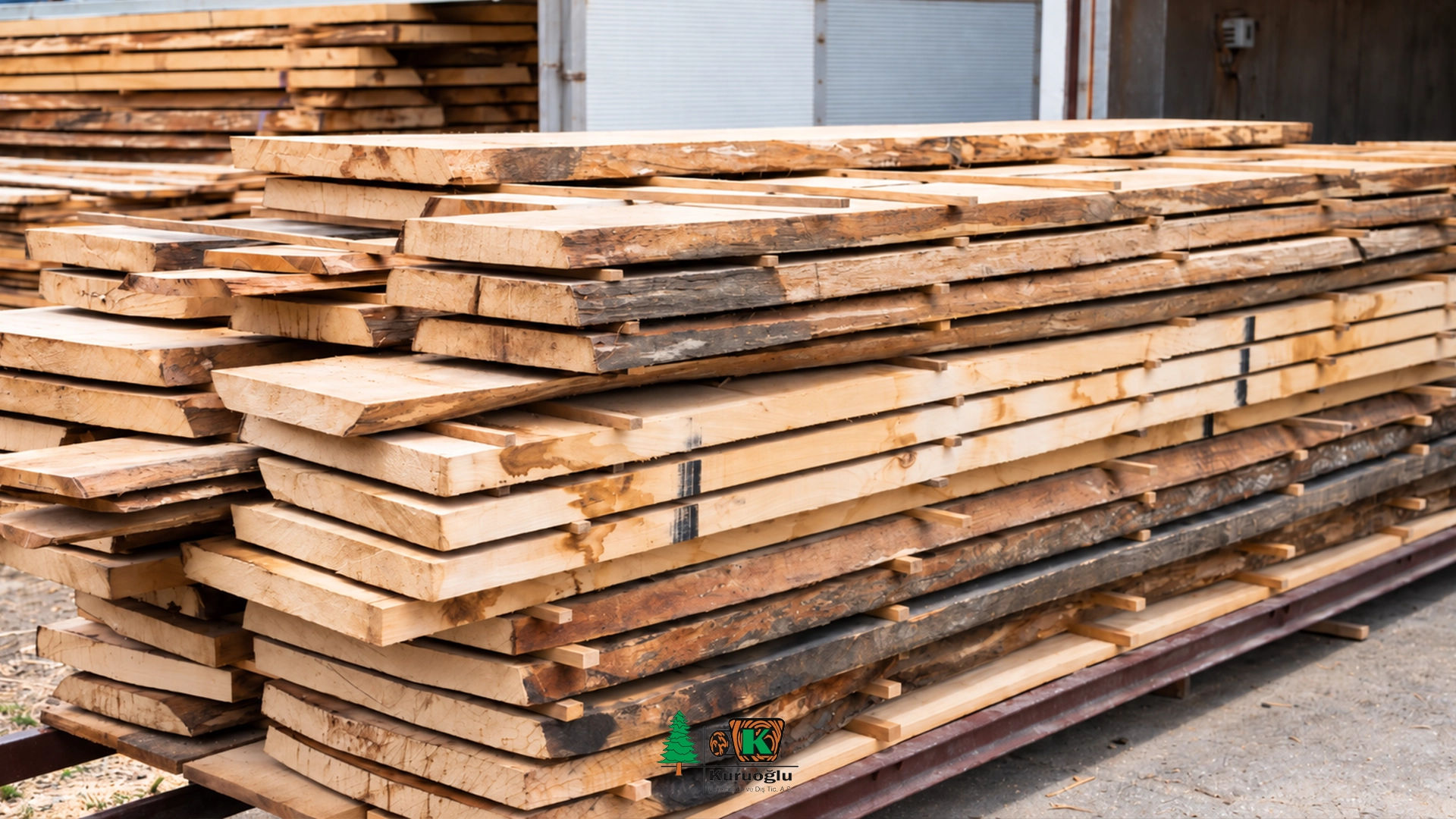
Boards are stacked with suitable spacers, commonly called stickers, to allow air to circulate between individual pieces.
Correct spacing and alignment help promote consistent airflow and reduce the likelihood of distortion.
Improper stacking can contribute to warping, bending, and uneven drying.
Step 2: Loading the Drying Kiln
After preparation, the timber is placed inside a drying chamber.
Industrial wood kilns use controlled heating and air circulation systems.
The operator adjusts temperature, relative humidity, and airflow according to the required drying schedule.
These variables influence how moisture moves from the interior of the wood toward its surface and evaporates into the surrounding air.
The appropriate settings depend on the characteristics of the wood.
Step 3: Controlled Moisture Removal
As the drying process continues, the moisture level inside the lumber gradually decreases.
However, drying timber too rapidly can create significant moisture differences between the outer and inner regions of the board.
These differences may generate internal stresses and increase the risk of cracking or other drying defects.
For this reason, producing high-quality kiln-dried lumber requires more than simply exposing wood to high temperatures.
The process must balance drying efficiency with the need to protect the material.
Step 4: Equalizing and Conditioning
Toward the end of the drying cycle, additional procedures may be used to improve moisture consistency and reduce residual drying stresses.
Equalizing is intended to reduce excessive differences in moisture content among boards within a kiln charge.
Conditioning may be used to relieve certain drying stresses that developed during the process.
Not every species or drying schedule requires identical conditioning procedures.
The appropriate approach depends on the timber and its intended use.
Step 5: Final Moisture Testing and Quality Control
After drying, the lumber is inspected to determine whether the desired moisture level has been achieved.
Measurements should be taken from representative boards throughout the batch.
The average moisture content is important, but variation between boards also requires attention.
For precision manufacturing, substantial moisture differences within the same shipment may create problems during machining, bonding, or installation.
Quality control should therefore consider moisture distribution, visible drying defects, dimensional condition, and the applicable product specifications.
Kiln-Dried Lumber vs. Air-Dried Lumber: What Is the Difference?
Two commonly used approaches to reducing timber moisture are kiln drying and air drying.
Both methods remove water from wood, but they differ in their operating conditions, drying speed, and degree of control.
Kiln-dried lumber is produced in a controlled chamber using regulated temperature, humidity, and airflow.
Air-dried lumber is dried primarily through exposure to natural atmospheric conditions.
The choice between these methods depends on the application, production schedule, climate, and desired final moisture level.
Feature | Kiln-Dried Lumber | Air-Dried Lumber |
|---|---|---|
Drying method | Controlled kiln environment | Natural atmospheric conditions |
Drying speed | Generally faster | Generally slower |
Moisture control | More precise | Dependent on weather |
Achieving low moisture levels | Usually easier | Can be limited by climate |
Energy requirements | Can be higher | Generally lower |
Drying defects | Possible with poor schedules | Possible with poor stacking or conditions |
Industrial consistency | Well suited to controlled production | Depends on the intended application |
Why Is Kiln-Dried Lumber Preferred?
Manufacturers often select kiln-dried lumber because controlled drying can produce more consistent moisture levels.
Consistency is particularly valuable in industries where materials must meet defined specifications.
Furniture factories, flooring manufacturers, cabinet makers, and joinery workshops often require timber that is ready for precision machining.
A controlled drying process can help manufacturers plan production more efficiently.
However, the quality of kiln-dried timber also depends on correct stacking, suitable drying schedules, equipment performance, and final inspection.
Kiln drying alone does not guarantee that every board will be free from defects.
How Is Wood Moisture Content Measured?
Accurate wood moisture measurement is an important part of quality control in the timber industry.
Several methods are available for determining moisture content.
Two commonly used approaches are electronic moisture meters and the oven-dry method.
Electronic Wood Moisture Meters
Electronic wood moisture meters provide practical measurements during timber inspection, processing, and installation.
Different devices use different measurement principles.
Pin-type resistance meters estimate moisture based on the electrical resistance of the wood.
Pinless meters generally use electromagnetic or dielectric properties to estimate moisture levels.
Both methods have advantages and limitations.
Measurement accuracy may be influenced by wood species, temperature, material thickness, density, and meter calibration.
It is important to use the device according to the manufacturer's instructions.
Measurements should also be taken from suitable locations because moisture can vary within a board.
For commercial timber inspections, testing multiple representative boards usually provides more useful information than relying on a single reading.
Oven-Dry Moisture Measurement
The oven-dry method is a widely recognized reference procedure for determining wood moisture content.
A sample is weighed before drying.
It is then dried under specified conditions until a constant oven-dry mass is obtained.
The difference between the initial and final masses is used to calculate the moisture content.
EN 13183-1 describes the oven-dry method for determining the moisture content of a piece of sawn timber.
Although this method is valuable for accurate determination, it requires sampling and drying time.
Electronic meters are therefore commonly used for routine production and site measurements, while the oven-dry method may be used for reference testing.
Why Does Kiln-Dried Lumber Warp or Crack?
Although kiln-dried lumber can provide improved dimensional stability, it is not completely immune to warping, twisting, cracking, or shrinkage.
Wood is a natural material whose properties vary according to grain orientation, species, and growth characteristics.
Several factors can contribute to defects after drying.
Changes in Environmental Humidity
When wood absorbs moisture, it may expand.
When it loses moisture, it may shrink.
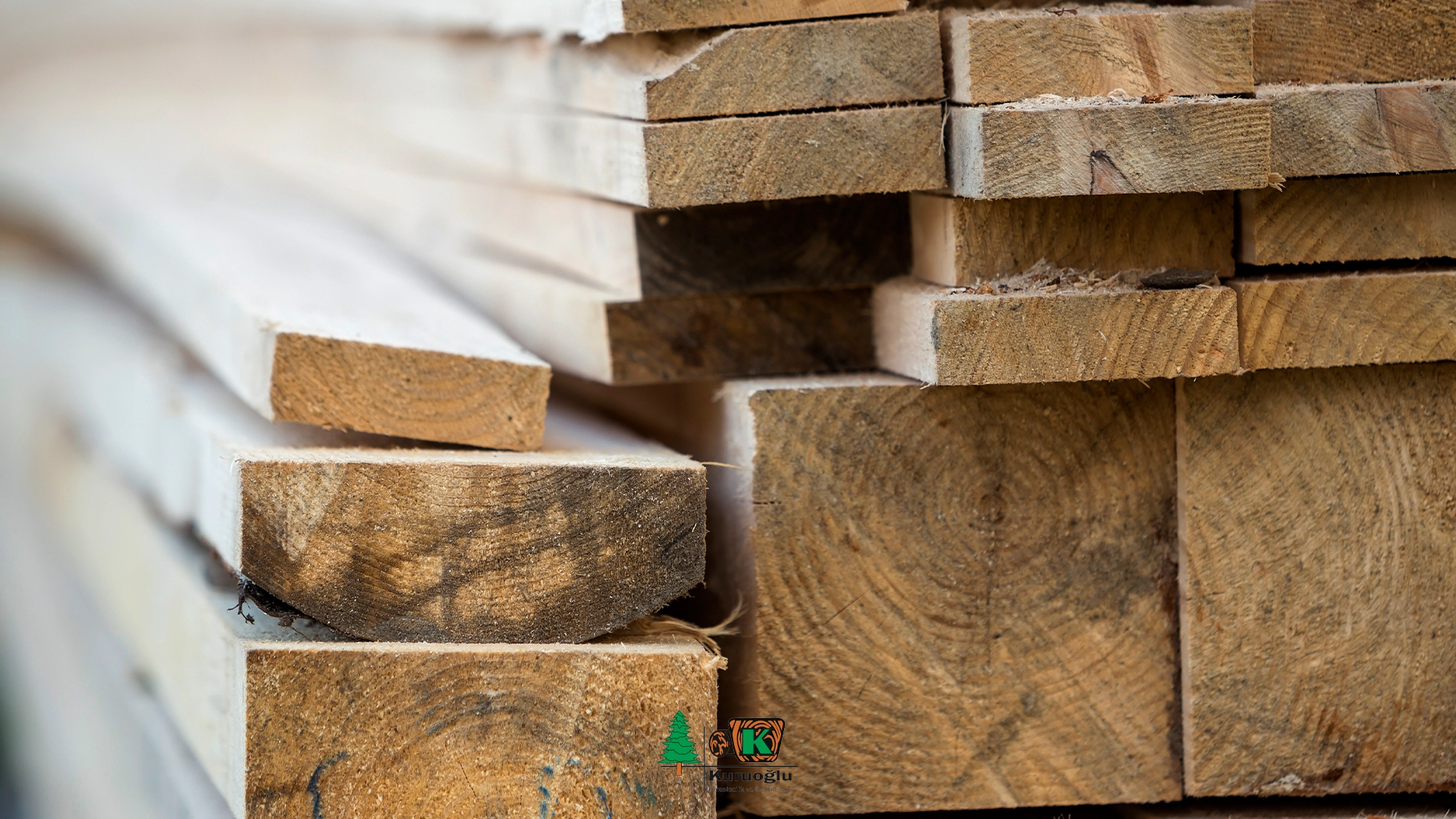
Because dimensional changes differ along various grain directions, uneven moisture movement can create internal stresses.
These stresses may lead to warping or distortion.
Improper Kiln-Drying Conditions
Excessively aggressive drying schedules may cause the outer regions of a board to dry much faster than its interior.
This can create moisture gradients and drying stresses.
Depending on the material and conditions, defects may include surface checking, internal checking, or other forms of damage.
Incorrect Storage Conditions
Lumber that has been properly kiln-dried can absorb moisture again if it is stored in a damp environment.
Direct contact with wet floors, exposure to rain, condensation, or unsuitable warehouse conditions may increase moisture content.
Poor stacking and insufficient support can also contribute to distortion.
Wood Species and Grain Structure
Different wood species respond differently to drying.
Oak, beech, walnut, and pine have different physical and anatomical properties.
Their shrinkage characteristics and sensitivity to drying defects are not identical.
As a result, kiln schedules should be adapted to the specific timber being processed.
Where Is Kiln-Dried Lumber Used?
Kiln-dried lumber is widely used in industries where moisture control, dimensional accuracy, and reliable machining performance are important.
Furniture Manufacturing
Solid wood furniture often requires carefully dried timber to reduce the risk of unwanted dimensional changes.
Tables, cabinets, wardrobes, chairs, and other furniture products may benefit from properly conditioned hardwood lumber.
In large solid wood panels, maintaining appropriate moisture levels is especially important for stability.
Door and Window Manufacturing
Doors and windows require accurate dimensions to function properly.
Moisture-related expansion or shrinkage may affect how wooden components fit together.
Using lumber with a moisture content appropriate for the intended environment can help reduce these risks.
Hardwood Flooring
Flooring is one of the applications in which moisture control is particularly important.
Solid hardwood flooring can expand or contract as environmental conditions change.
Proper drying and installation moisture assessment help reduce the risk of excessive movement after installation.
Interior Architecture and Decoration
Decorative wall panels, stair components, shelving, and architectural woodwork may also require controlled moisture levels.
Properly dried timber supports precision cutting, assembly, and surface finishing.
Construction and Structural Applications
Certain structural lumber products are kiln-dried to meet moisture requirements.
However, kiln-dried lumber should not automatically be assumed to meet structural performance requirements.
Structural applications may also require appropriate strength grading, dimensional specifications, and compliance with relevant construction standards.
Moisture Content in Oak, Beech, Walnut, and Pine Lumber
Different wood species require different drying considerations.
Density, anatomical structure, permeability, and shrinkage behavior influence how moisture moves through wood during drying.
Oak Lumber
Oak is a valuable hardwood commonly used in flooring, furniture, cabinetry, and architectural woodwork.
Because of its characteristics, oak may require careful drying to reduce the risk of checking and internal stresses.
Thicker oak boards can be particularly sensitive to unsuitable drying schedules.
Proper moisture management is therefore essential when preparing oak lumber for precision applications.
Beech Lumber
Beech is widely used in furniture manufacturing and various interior wood products.
Its dimensional behavior requires attention during drying and subsequent storage.
Controlled moisture reduction helps prepare beech timber for machining and manufacturing.
The final moisture target should reflect the environment in which the finished product will be used.
Walnut Lumber
Walnut is valued for its distinctive color, grain patterns, and decorative appearance.
It is frequently selected for premium furniture, interior design, and other applications where visual quality is important.
Appropriate drying and handling can help preserve the appearance and performance of walnut lumber.
Correct stacking and moisture control are especially valuable for high-quality decorative boards.
Pine Lumber
Pine is used in a wide variety of construction, joinery, furniture, and general woodworking applications.
Drying requirements depend on the pine species, board dimensions, initial moisture level, and intended use.
There is no single drying schedule suitable for every pine product.
Selecting the correct process helps support consistent quality and reduce avoidable drying defects.
What Should You Consider When Buying Kiln-Dried Lumber?
Purchasing high-quality kiln-dried lumber requires evaluating more than price alone.
The timber must be suitable for the intended application and meet the necessary technical requirements.
One of the first considerations is the wood species.
Different hardwoods and softwoods offer different characteristics in terms of appearance, strength, workability, and durability.
Another important factor is lumber moisture content.
Buyers should confirm that the moisture level is appropriate for their manufacturing or installation requirements.
Other important considerations include:
Wood species and quality grade
Board thickness, width, and length
Target moisture content
Moisture variation between boards
Visible cracks, checking, or distortion
Storage and handling conditions
Suitability for the intended application
Availability of relevant grading or testing information
Order quantity and delivery requirements
For precision manufacturing, it may be useful to specify an acceptable moisture range rather than relying on a general description such as "dry lumber."
Clear technical specifications can help buyers and suppliers establish consistent quality expectations.
What Determines Kiln-Dried Lumber Prices?
Kiln-dried lumber prices are influenced by several technical and commercial factors.
The wood species is often one of the most important variables.
Oak, walnut, beech, and pine have different market values and processing characteristics.
Board dimensions and quality grades also influence cost.
For example, wide, clear hardwood boards may command different prices from smaller boards with visible natural defects.
The kiln-drying process itself may contribute to the final price through energy consumption, equipment operation, handling, and production losses.
Additional factors include:
Timber origin
Available supply
Board dimensions
Hardwood or softwood species
Drying requirements
Quality classification
Processing and finishing
Transportation and logistics
Order volume
Currency fluctuations
When comparing kiln-dried lumber prices, buyers should consider both the initial purchase price and the material's suitability for their intended manufacturing process.
Lumber with an unsuitable moisture level may create additional waste, reworking costs, or production difficulties.
Therefore, total material value should be assessed in relation to quality and performance, not simply price per cubic meter.
How Should Kiln-Dried Lumber Be Stored?
Proper storage is essential for maintaining the condition of kiln-dried timber.
Because wood remains hygroscopic after drying, it can absorb or release moisture as surrounding conditions change.
For this reason, kiln-dried lumber should be stored in an environment appropriate for its intended use.
Whenever possible, timber should be protected from direct rain, water leaks, and excessive condensation.
Boards should not be placed directly on damp floors.
Instead, they should be supported on suitable raised surfaces and stacked correctly.
Proper airflow should be maintained while avoiding unnecessary exposure to sudden environmental changes.
For high-precision manufacturing, controlling warehouse humidity may help reduce variations in the moisture content of stored material.
Timber transported between regions with different climates may also require appropriate acclimatization before manufacturing or installation.
Correct storage practices help preserve the benefits of kiln drying and reduce the likelihood of moisture-related problems.
Frequently Asked Questions About Kiln-Dried Lumber
What is kiln-dried lumber?
Kiln-dried lumber is sawn timber that has been dried in a controlled chamber using regulated temperature, humidity, and airflow. The process reduces the wood's moisture content to a level suitable for its intended application.
What is the ideal wood moisture content?
The ideal wood moisture content depends on the application and environmental conditions. Indoor furniture may require approximately 6–10% moisture, while other products may have different requirements. The final target should follow relevant specifications.
Can kiln-dried lumber absorb moisture again?
Yes. Kiln-dried lumber can absorb moisture from humid surroundings after drying. Proper storage and handling are necessary to maintain a suitable moisture level.
Why does kiln-dried wood crack?
Cracking may result from excessively rapid drying, unsuitable kiln schedules, internal stresses, or moisture changes after processing.
How long does kiln drying take?
The duration of timber kiln drying depends on the wood species, board thickness, initial moisture content, target moisture level, and drying equipment. There is no single drying time suitable for all lumber.
Is kiln-dried lumber the same as dry lumber?
Not necessarily. Kiln-dried lumber specifically refers to timber dried using a controlled kiln process. Dry lumber may also include wood that has been air-dried. Two boards may have similar moisture contents despite being dried through different methods.
How do you measure wood moisture content?
Wood moisture content can be estimated with electronic moisture meters or determined using the oven-dry method. Accurate testing requires appropriate equipment, sampling techniques, and consideration of the wood species.
Is kiln-dried lumber suitable for furniture?
Yes. Properly dried kiln-dried lumber can be suitable for furniture manufacturing when its moisture content, species, grade, and dimensions match the intended application.
What happens if wood moisture content is too high?
Excessive wood moisture content may lead to shrinkage, warping, joint separation, and other dimensional problems as timber dries during use. Prolonged exposure to high moisture conditions can also increase the risk of biological deterioration.
Why do kiln-dried lumber prices vary?
Kiln-dried lumber prices vary according to species, quality grade, dimensions, drying requirements, processing costs, supply conditions, and transportation expenses.
Choose the Right Timber with Kuruoğlu Kerestecilik
The long-term performance of wood depends on selecting the right species, applying appropriate processing methods, and maintaining moisture levels suitable for the intended application.
Kiln-dried lumber offers important advantages in furniture manufacturing, flooring, joinery, interior architecture, and other woodworking industries where dimensional accuracy and material consistency are essential.
However, achieving reliable results requires more than completing a drying cycle.
The final wood moisture content, species characteristics, manufacturing requirements, and storage conditions must all be considered together.
Kuruoğlu Kerestecilik ve Dış Tic. A.Ş. provides a valuable point of reference for professionals seeking information about timber products, hardwood characteristics, and appropriate material selection for different applications.
Whether you are involved in furniture manufacturing, interior architecture, woodworking, or international timber sourcing, choosing materials with suitable technical properties is an important step toward consistent production quality.
To explore timber products and learn more about available wood solutions, visit the official website of Kuruoğlu Kerestecilik ve Dış Tic. A.Ş..
The right wood species, an appropriate drying process, and controlled moisture levels form the foundation of reliable, high-quality timber applications.